
Anja Liebermann, Annett Kieschnick, Bogna Stawarczyk
How do different tooth-colored CAD/CAM restorative materials behave when stored in staining solutions when subjected to extreme testing by scientific laboratory testing?
Discoloration of tooth-colored restorative materials can be an explosive issue in clinical use. Such changes lead to dissatisfaction among everyone involved, particularly in the aesthetically visible area. If discoloration occurs, early polishing is a possible measure. If re-polishing is not an option or the desired effect is not achieved, in the worst case scenario a restoration may even have to be replaced. In a laboratory study, three CAD/CAM materials were subjected to an extreme test.
Background
CAD/CAM blocks from which dental restorations are milled or ground are subject to a standardized industrial manufacturing process. This should give the material better mechanical stability and chemical longevity (e.g. resistance to water absorption, which can lead to discoloration). The aim of this in vitro study was to examine the influence of different staining storage media at different storage times and temperatures on the discoloration of three tooth-colored CAD/CAM materials for definitive restorations.
Examination method
A total of 288 test specimens (96 test specimens per tooth-colored material examined) with a thickness of 1 ± 0,03 mm were produced from three CAD/CAM materials:
- Composite (Lava Ultimate, 3M),
- polymer-infiltrated ceramics (VITA Enamic, VITA Zahnfabrik) and
- Leucite ceramic (IPS Empress CAD, Ivoclar Vivadent).

After a baseline measurement (measurement of the initial value before storage), the test specimens were placed in
- Red wine,
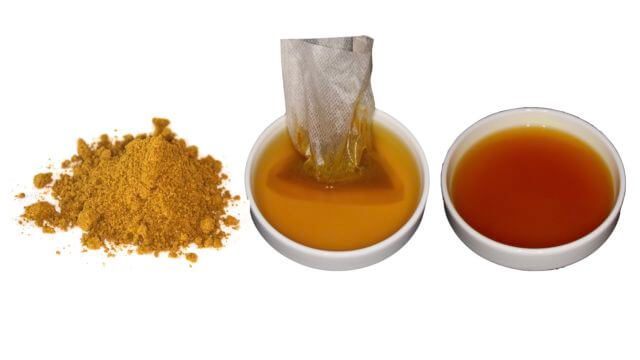
- curry solution,
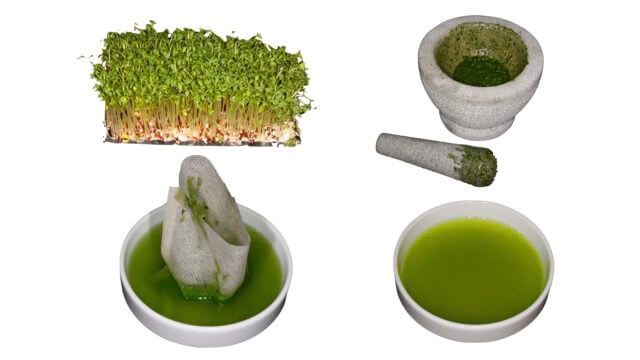
- Cress solution and
- Stored in distilled water at 37°C or 55°C.
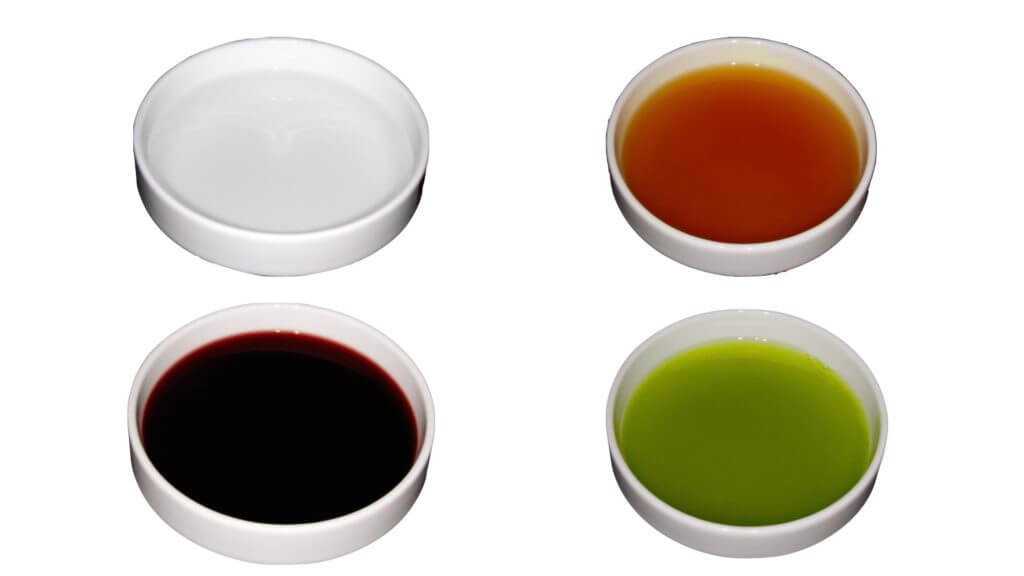
The discoloration (∆E) was measured after one day and after seven days of storage with a spectrophotometer (Lambda 35 Perkin Elmer, Perkin Elmer Inc.) - transmission method. The data were statistically evaluated (p < 0,05).
Results
The storage duration had the greatest influence on the ∆E values (η P ² = 0,295, p <0,001), followed by the dyeing solution (η P ²=0,171, p<0,001), the CAD/CAM material (η P ²=0,049, p<0,001) and the storage temperature (η P ²=0,033, p<0,001).
Test specimens that were stored in staining solutions for seven days showed greater discoloration than those that were stored for only one day.
The highest discoloration values (∆E values) were measured for test specimens stored in curry solution. This was followed by red wine, cress solution and distilled water. The LAVA Ultimate composite showed higher ∆E values compared to the hybrid ceramic VITA Enamic or the leucite ceramic IPS Empress CAD. The test specimens stored at 37°C showed significantly less discoloration than those stored at 55°C.
Conclusions
The degree of coloring of the materials depends in particular on the coloring storage medium and the temperature. The strongest discoloration of the material was measured with LAVA Ultimate.
The details can be found in this publication: Liebermann A, Vehling D, Eichberger M, Stawarczyk B. Impact of storage media and temperature on color stability of tooth-colored CAD/CAM materials for final restorations. Short title: Impact of storage media and temperature on CAD/CAM-material discoloration. J App Biomater Func Mater 2019; epub ahead