
by Nina Lümkemann, Annett Kieschnick, Bogna Stawarczyk
Are the mechanical properties of the newly developed 3D printing materials comparable to the results of other manufacturing techniques? The article discusses this based on a current study.
Additive technologies with a focus on 3D printing are increasingly becoming part of everyday practice and laboratory life. Some technologies, such as stereolithography (SLA) and digital light processing (DLP), have already become established in dentistry and cover a wide range of indications (e.g. models). The limiting factor is currently the development of suitable polymer-based 3D printing materials that meet the requirements of a class IIa medical device and can be used permanently in the patient's mouth.
3D printing compared to other manufacturing processes
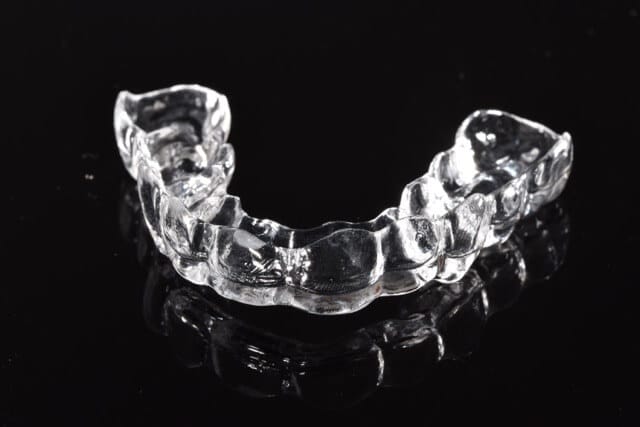
Currently available materials are of great interest, particularly for the production of bite splints and drilling templates, and thus for short-term use. When producing rails using 3D printing (applying), material can be significantly saved compared to milling (removing). Compared to conventional production using injection technology, the focus of 3D printing is on saving time and process reliability.
But what about the mechanical properties of the newly developed 3D printing materials? Are these comparable to the results of other manufacturing techniques (milling from PMMA blank and conventional injection process)? The present study evaluates the breaking load and abrasion resistance of a 3D printed rail material in comparison to milling and conventional production.
Investigation setup
For the investigation, test specimens in the form of crown caps to simulate a bite splint were produced using three different manufacturing processes:
- 3D printed (DLP technology) from rail material
- Milled from PMMA blank
- Conventionally using injection procedures
- All test specimens were polished to a high shine and attached to a metal stump.
All test specimens were polished to a high shine and attached to a metal stump.
The breaking load was examined both initially and after artificial aging in a chewing simulator (120.000 cycles, 37° C). To determine abrasion resistance, occlusal impressions were made and digitized using a laser scanner to examine the material loss of the test specimens after 20.000 and 120.000 chewing cycles. The material volume loss was calculated and the totality of all data was statistically evaluated.
Results
The milled copings achieved the highest initial breaking load compared to the 3D printed and conventionally manufactured copings. After artificial aging in the chewing simulator, the milled caps again showed the highest values, followed by the 3D printed caps. The conventionally manufactured copings achieved the lowest breaking load.
For the milled and conventionally manufactured copings, artificial aging led to a decrease in stability, while the values of the 3D printed copings were not affected. On the other hand, the 3D printed copings showed the greatest loss of material volume (abrasion), followed by the milled copings. The conventionally manufactured caps showed the highest abrasion resistance.
Conclusion
3D printed crown copings demonstrated lower abrasion resistance and lower breaking load than milled or conventionally manufactured copings. For this reason, the use of 3D printed bite splints made from the material examined is only recommended for a short period of time. Further developments for the rail materials that are processed in 3D printing using DLP technology are necessary.
Conclusion for everyday practice and laboratory life:
Due to low abrasion resistance and breaking load, 3D printed bite splints can only remain in the patient's mouth for a period of up to a month. This value also corresponds to the period for which the material is currently approved.
Publication: Lutz AM, Hampe R, Lümkemann N, Eichberger M, Stawarczyk B. Fracture resistance and 2-body-wear of 3-dimensional printed occlusal devices. J Prosthetic Dent 2018 [epub ahead]