Patient communication: In modern dentistry, communication with patients is of paramount importance, in addition to professional expertise. Effective communication makes it possible to understand patients' concerns, provide them with relevant information, and involve them in decisions. Understanding clinical, social, and emotional needs and being able to respond to them are crucial. Dental technician Marie Witt discusses the changes that characterize "today's patient" in this article. Based on her experience, she describes how her work has transformed by focusing on a sound communication concept during patient consultations. The experienced master dental technician encourages a shift in perspective. (Image: Adobe, Djomas)
ZTM Marie Witt
The patient in the age of medialization differs in many ways from the patient from earlier times. Just as digital communication and media consumption changes (e.g. through social networks), people orient and adapt to them. This has an impact on dental and dental technology work and the way patients are treated, e.g. B. during information or consultation discussions, patient communication.
Patient communication: changes and the “patient of today”
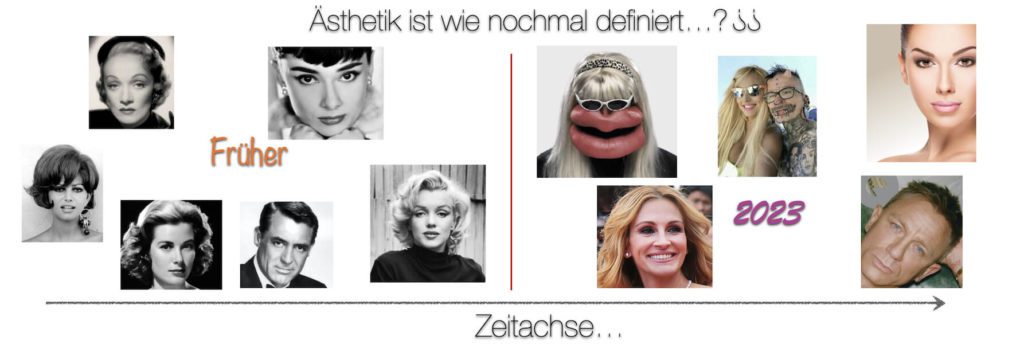
Patients today are more enlightened than before; It remains to be seen whether the knowledge is always technically correct. Patients actively inform themselves about treatment options and alternatives. Dr. Google is the new lexicon; Here the patient can find almost everything. Depending on how meticulously the research is carried out, the information is more or less productive. Patients today often have higher aesthetic standards, influenced, among other things, by “role models” in social media. In addition, a large number of patients pay great attention to health prevention, e.g. E.g. healthy eating, exercise, work-life balance, dental prophylaxis, etc.
And even though a lot has changed, one thing is still the same: the patient's fear or discomfort when visiting the dentist's office. In 2002, the DGZMK (German Society for Dentistry, Oral and Maxillofacial Medicine) reported that only 20% of patients were fear-free; this number is unlikely to have changed significantly. This means that 60% to 80% of people associate going to the dentist with anxiety.
These are by no means all the challenges that patients face in the dental practice and dental laboratory. In addition, there are, for example, “aesthetics patients” who want their own particular vision of their new smile to be fulfilled. In addition, patients must be differentiated in their decision-making ability. Many consciously make their own decisions; others don't want to or can't do this and need our help. And parallel to the changes in patients, dentistry has also developed and is now, for example, significantly more minimally invasive than it was a few years ago.
The new aesthetic dentistry
The self-determined “patient of today”
I know from my own professional experience that patients demand our full attention in everyday work - both in the dental practice and in the dental laboratory. This is not always easy. Because not only clinically, but also emotionally, we encounter patients with very different concerns: fear of treatment, high aesthetic demands, functional problems and the resulting complex complaints, the desire for straight and/or brighter teeth, toothache, dissatisfaction with an existing restoration, etc . – the list is long.

Squaring the circle or how we manage to take the challenges into account in consultations or information meetings and still be efficient. The solution: make the affected person a participant. This principle from change management can also be formulated differently: Human dignity lies in choice.
Patient communication: breaking new ground
The “patient of today” therefore demands the highest level of attention. This is associated with a change of perspective in patient communication. The medical literature provides this. And it's not a potpourri of phrases; Rather, it's about psychologically based communication models that not only sound good in theory, but are practically applicable. These not only provide us with linguistic finesse, but also impart concrete skills to adapt flexibly and individually to the conversation situation with the patient.
Integrate concepts efficiently
It is a logical conclusion that, in addition to clinical and technical work concepts, we need a communication concept for patient consultations. Understanding fundamental communication principles is crucial for grasping how to connect with and engage patients during these conversations. Schulz von Thun's communication square and the patient typology based on the Riemann-Thomann model pinpoint individual communication needs. This leads to an understanding of how to avoid conflicts during patient consultations.
Reflecting on this, I have personally become aware of one thing in the many discussions with patients over the past few years: If we do not have an understanding of the patient's emotional history, it will be difficult for us to understand their dental history. The emotional and dental stories are inextricably linked and should be heard. Many patients have a keen sense of whether we are listening or whether we are just pretending to listen.
Would you advise yourself in the same way that you advise your patients? One example is the active passive body language that the patient intuitively pays attention to. This theory comes from the specialist literature on the subject of “conversational skills”.

Efficiency and good conversation skills are not mutually exclusive, quite the opposite. (Image: Adobe, m.mphoto)
Basics for an efficient patient consultation
The time for a consultation is limited in everyday practice and laboratory life. But it often happens that patients cannot follow our explanations and ask the same questions several times. First of all: Efficiency and good conversation skills are not mutually exclusive, quite the opposite. A good conversation structure is based on time management. But how do we have an efficient conversation correctly? In the first step, the framework for the conversation is determined. Where can I talk to the patient undisturbed? In the dental practice, this can be the treatment room. In the dental laboratory, the conversation should take place in a separate room; a place where we and the patient are undisturbed. The next step is the basics, the conversation techniques. The topic is new for many. That was it for me too. But once used, I suddenly noticed a real change in the patient. But it is not the patient who has changed, but rather our interaction and therefore acceptance. A confidential basis is created. “Tools” for this are solid conversation techniques, such as: E.g.: active listening, motivational conversation, metacommunication, and of course empathy for the other person.
The result of good patient communication
Based on the information collected, the patient either makes a decision himself or he feels that a competent team is helping him and a decision is being made in his interests. He gains trust. We talk about “shared decision making” or “participatory decision making”. In the past, we tried not to make a decision for the patient. We avoided having to make a decision for or with the patient. Because we didn't want to hear during the raw spirit try-in: “You didn't understand me correctly. That's not what I had in mind."
Based on the information collected, the patient either makes a decision himself or he feels that a competent team is helping him and a decision is being made in his interests. He gains trust. We talk about “shared decision making” or “participatory decision making”. In the past, we tried not to make a decision for the patient. We avoided having to make a decision for or with the patient. Because we didn't want to hear during the raw spirit try-in: “You didn't understand me correctly. That's not what I had in mind."
Dr. Ellen Langer, professor of psychology at Harvard University, writes on the subject of decision-making: “People want a reason for their actions.” A simple “because…” is necessary and often sufficient. The patient then shows cooperative behavior as part of the therapy: compliance. The focus is also on the patient's cooperation and shared responsibility: adherence.
Last but not least
“Change the perspective of the patient”… that’s the title of the article. A few years ago, I personally realized how important it is for my work and patient communication to understand the patient's perspective. Dentistry is a medical craft. We are not machines, we have emotions. And this is exactly what we need when we work with and on people; "Fellow men". Situations often arise in which complaining and dissatisfied patients sit in front of us. You may know this; There is this one patient case that has been on your mind for years. Here the spiral of negatively escalating ways of communicating with each other was the reason why the restorative therapy could not be completed or could only be completed unsatisfactorily.
Take advantage of the opportunity to change your perspective! Break the vicious circle. The causes of communication difficulties do not lie with an individual, but rather with the interaction of the people involved. In everyday life we often only react to conflicts. However, it is better to act. I therefore prefer to take action myself, find out what upset the patient and actively adapt to him.
What I didn't realize at the time: There are different types of patients and each type requires a different level of communication. Today it is clear to me that conducting conversations and establishing communication always depends on the type of patient and that you should get involved with it. In order to successfully complete a restorative therapy, the patient's help is essential.
Conclusion
For me it has become essential to have access to well-founded communication concepts. These save us time in our everyday work. They allow for a structured approach. Incorrect communication due to missing facts is minimized and valuable working time is saved. Lengthy adjustments or new production can be reduced or almost eliminated. From today's perspective, I no longer want to be without my knowledge in the area of patient communication. And the patient? Of course not him either. The interpersonal trust is the reward for the effort and this is also communicated to the outside world. The word-of-mouth recommendation is a respectable side effect. Today we're talking about marketing; even better put: the marketing of the modern age.
Author:
ZTM Marie-Luise Witt, smile@ztm-marie-witt.de