
Various materials are available for cementing all-ceramic restorations, e.g. B. traditional cements (glass ionomer, zinc oxide phosphate cements or polycarboxylate cement) or luting composites. When adhesive cementation is necessary for zirconium oxide restorations was discussed in an earlier article. A question that is repeatedly asked by dentists and dental technicians: Why do you need a ceramic primer when adhesively inserting a zirconium oxide restoration?
Zirconia materials have developed rapidly in recent years. The variety of indications has increased. For example, let B. significantly improved aesthetic properties of translucent material blocks, in addition to the framework production, monolithic restorations in the posterior region become a therapy option.
Type of attachment
Traditional materials (cementing) or luting composites (adhesive insertion) can be used to definitively place a zirconia restoration. The advantage of adhesive fixation is reduced marginal microleakage. A leaky cement gap could trigger secondary caries or endodontic or periodontal complications. This affects the survival rates of the teeth and the restorations.
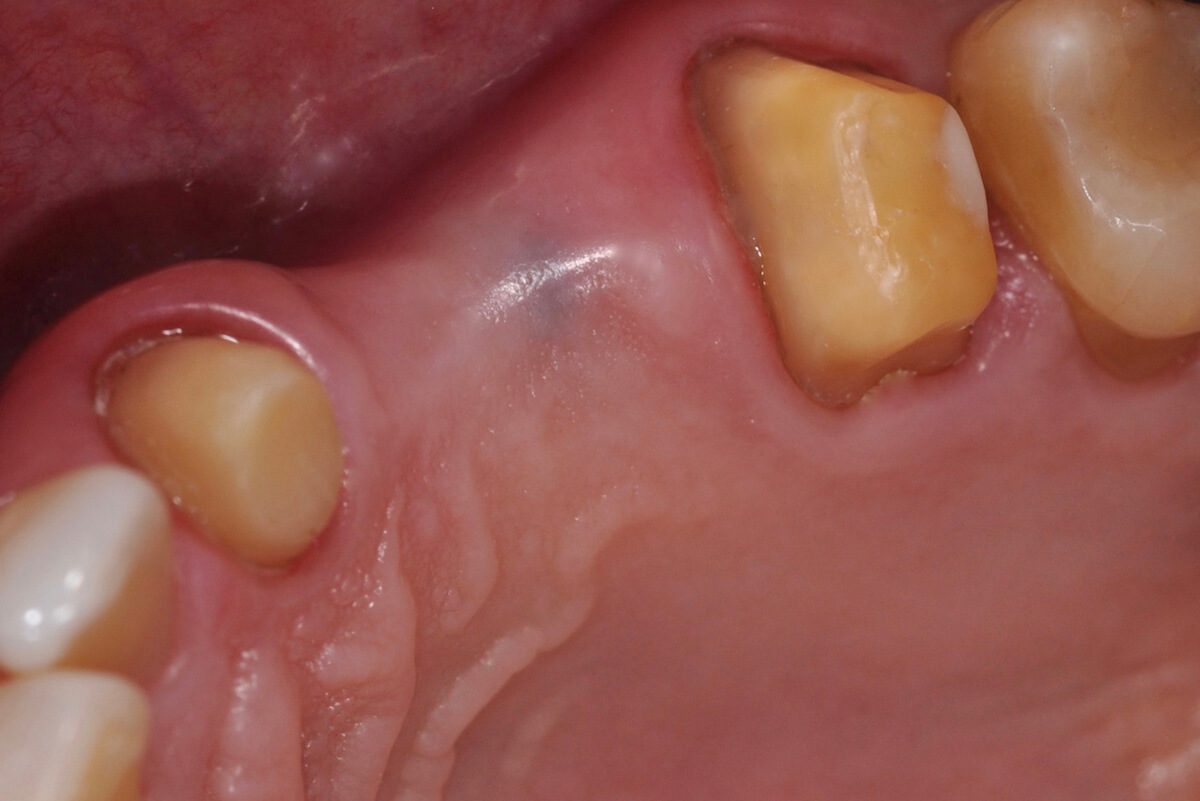
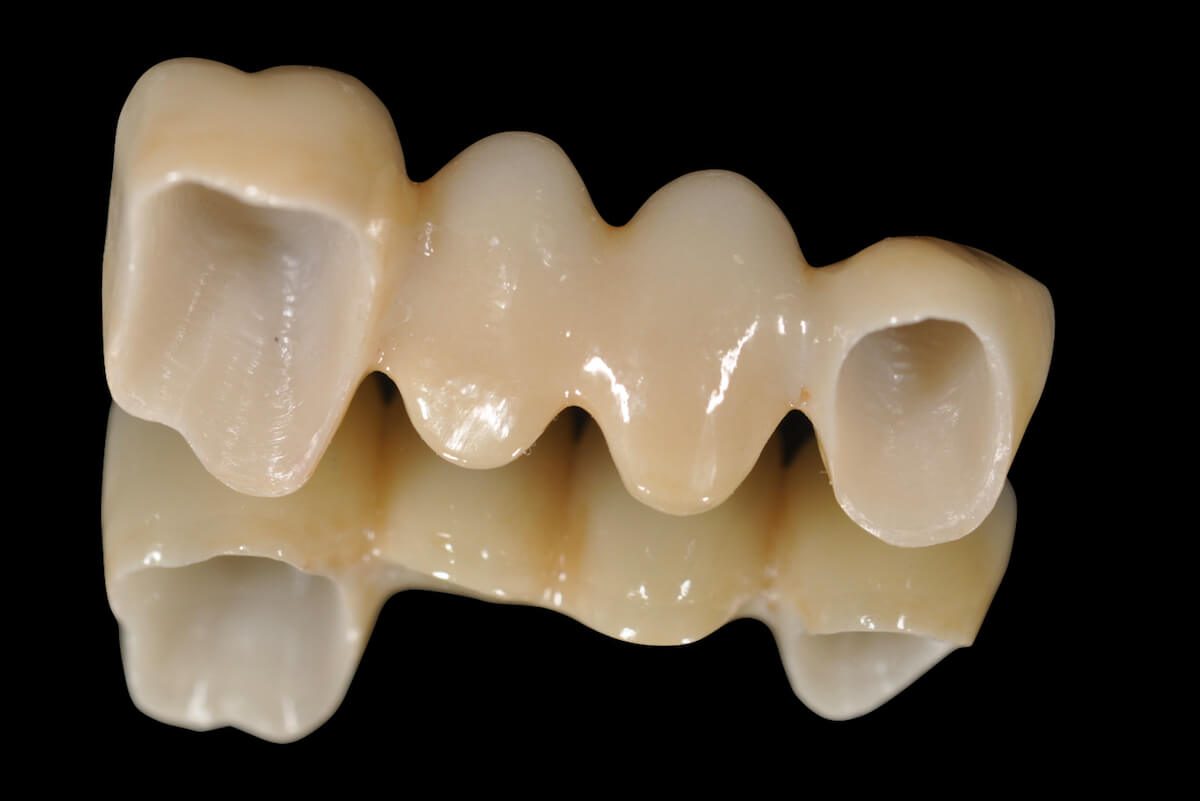
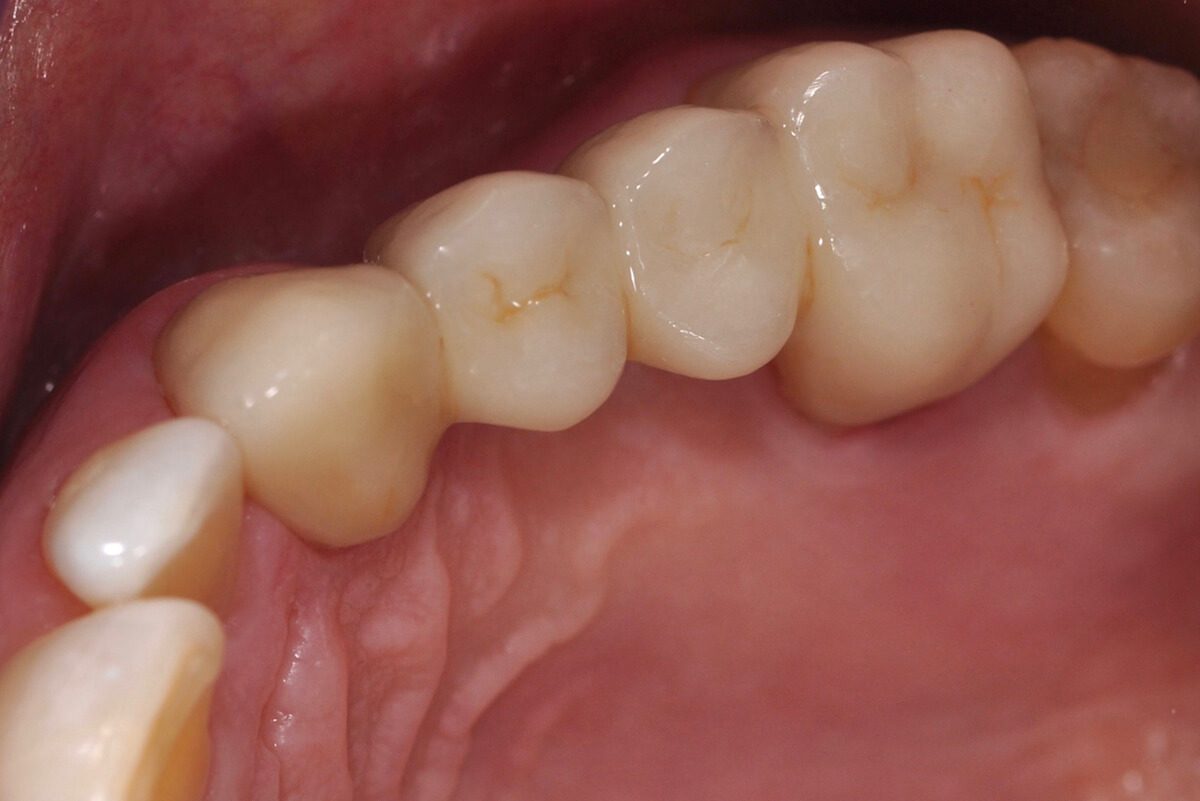
All-ceramic restoration on a zirconium oxide framework in the second quadrant
Classification of luting composites
In general, luting composites can be divided according to their composition into:
- conventional monomer-based luting composites (Bis-GMA, TEGDMA, UDMA) and
- Luting composites containing acid groups. These are again divided into:
Self-etching luting composites are easy and time-saving to handle. In contrast, conventional luting composites often require multi-step dental pretreatment with adhesive systems.
Background: The acidic methacrylates and the MDPs can form an adhesion (chemical bond) through direct interaction with the zirconium oxide surface. The phosphate ester group of the two bifunctional monomers can chemically bond to the zirconium oxide surface, while the methacrylate group is responsible for polymerization (hardening).
Function of a ceramic primer
In their instructions for use, manufacturers of luting composites recommend the use of a ceramic primer. This is a recommendation and is not a must. Basically, adhesion to zirconium oxide that has been pretreated with MDP ceramic primer leads to a good chemical bond. The chemically curing Panavia 21 and the dual-curing Panavia F 2.0 (both Kuraray Noritake) - both contain MDP monomers - have been scientifically well studied. They show a very good and more durable bond to zirconium oxide. The additional use of a ceramic primer significantly stabilizes the bond to the zirconium oxide in MDP-based luting composites.
Background: Ceramic Primer from Kuraray, like the luting composites from the Panavia Group, contains the MDP monomer. The MDP activates the silane in the ceramic primer, which means that long-term, stable adhesion to zirconium oxide can be achieved. The zirconium oxide restoration should be brushed with the ceramic primer, blown thinly and then adhesively secured.
SAVE: Zirconia restorations that are adhesively bonded must not be cleaned with phosphoric acid, as the oxygen sites necessary for chemical bonding will be prematurely covered with phosphorus groups, preventing a bond from forming between the zirconia and the luting material. Zirconia restorations should be cleaned ultrasonically with alcohol or distilled water.
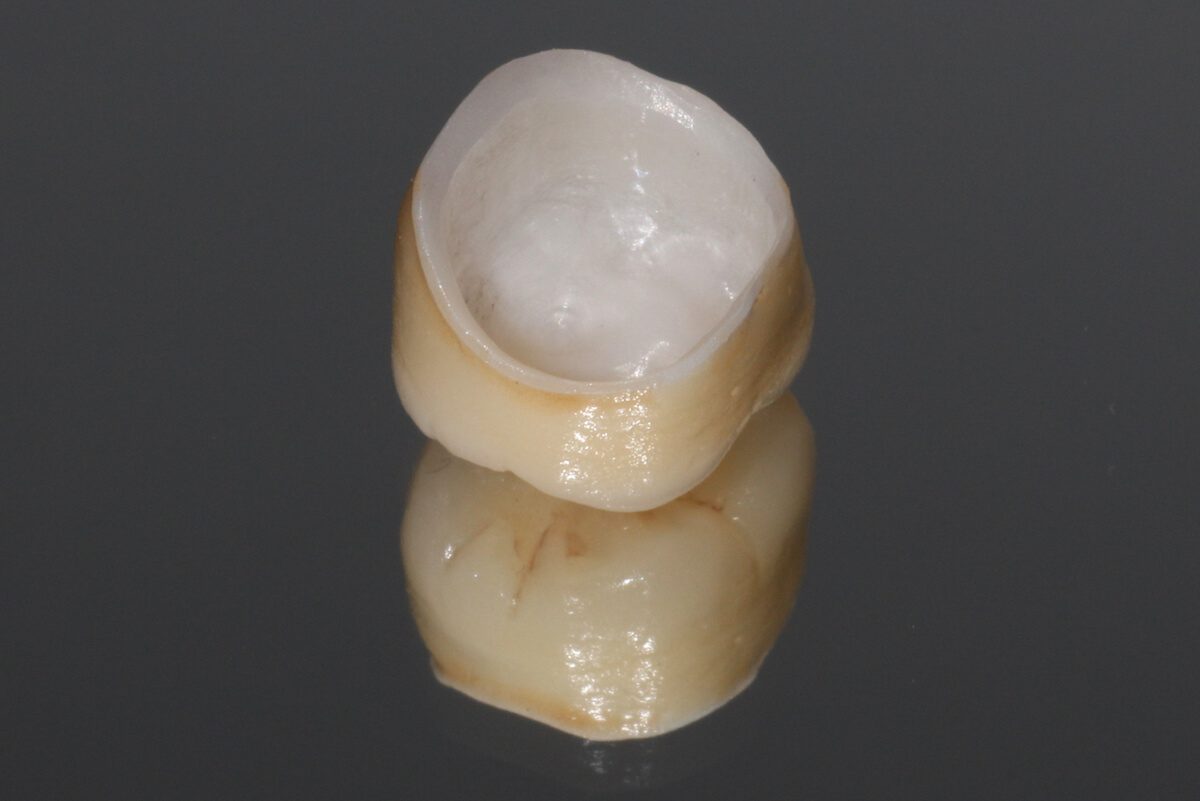
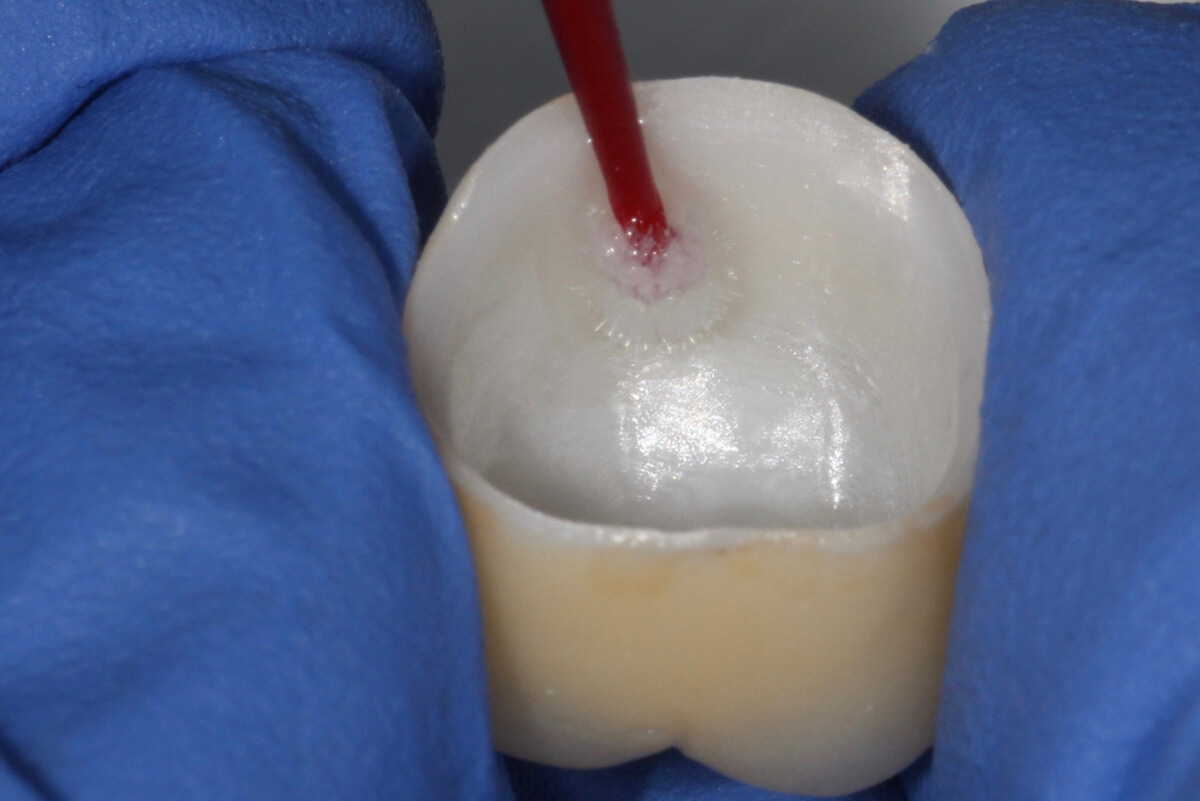
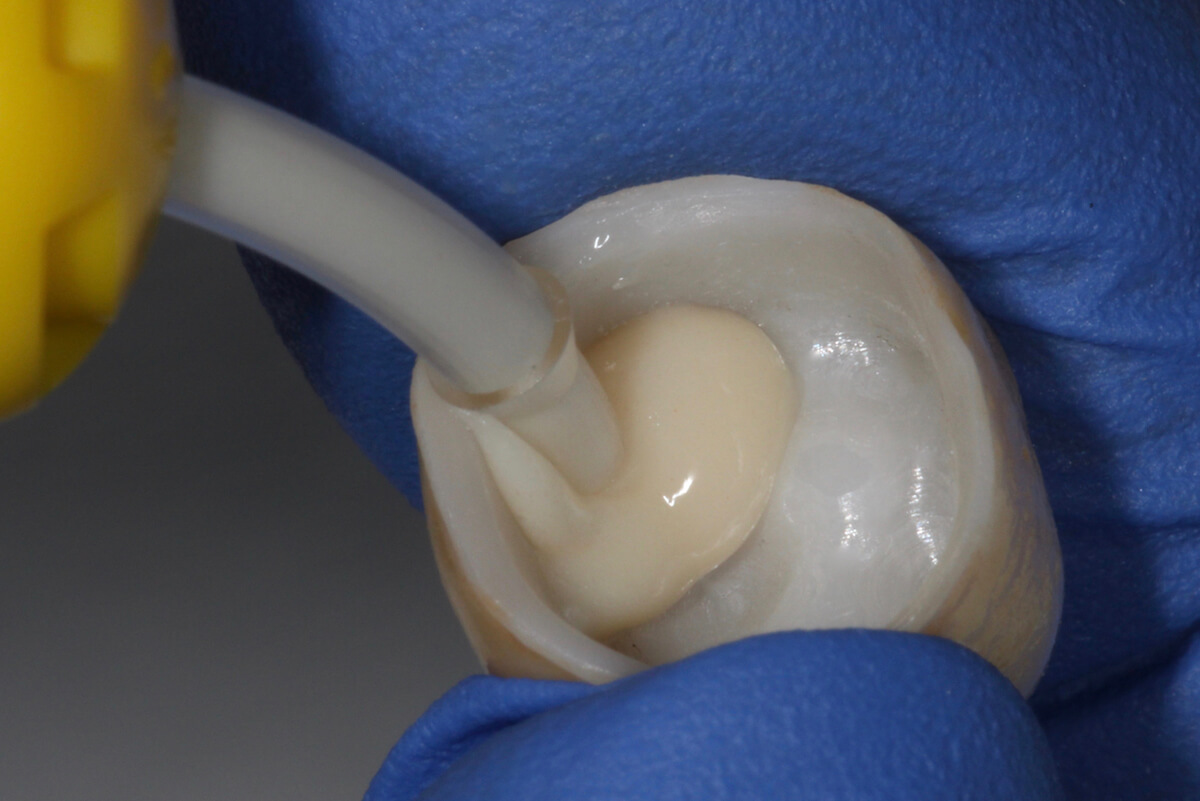
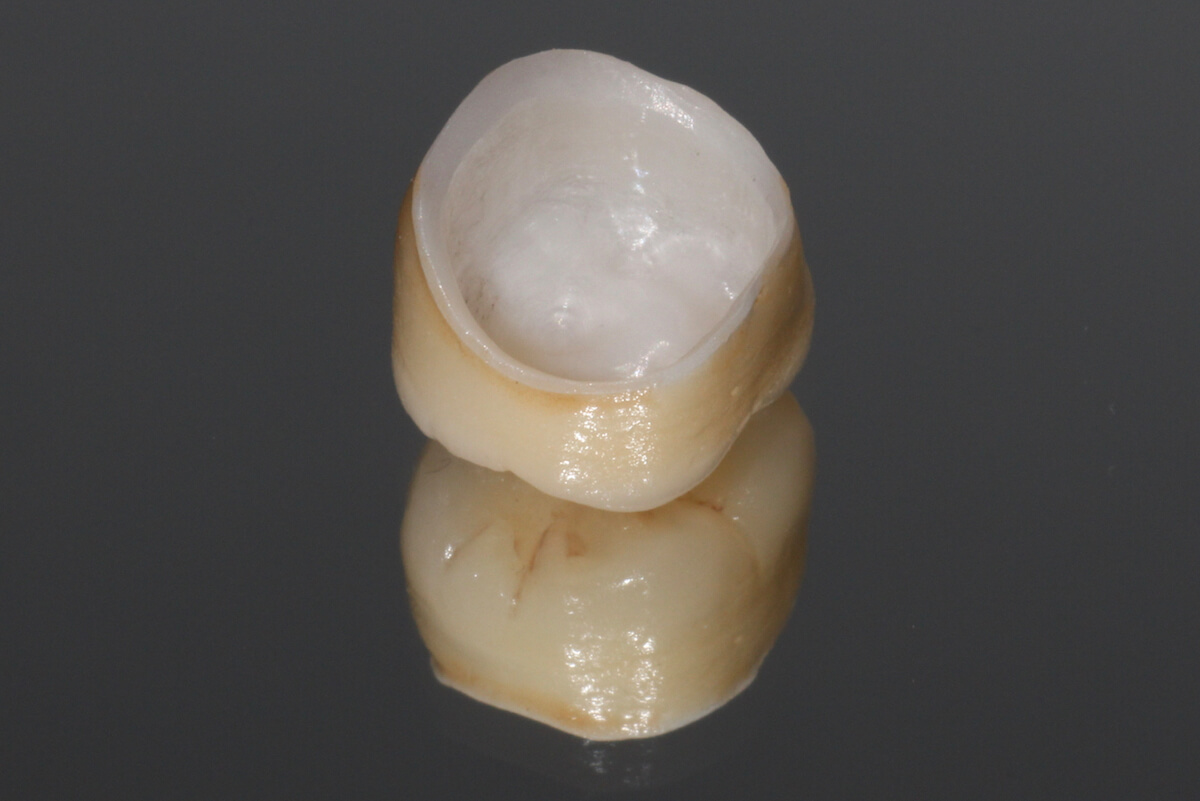
The inner surface of the ceramic veneered crown is brushed with ceramic primer (RelyX Ceramic Primer, 3M) and filled with self-adhesive luting cement (RelyX Unicem 2 Applicap, 3M).
examination
The presented study aimed to test the influence of ceramic primers in combination with self-etching luting composites on the shear strength of zirconium oxide. Various aging methods formed the basis of the investigation. The values determined were compared with the scientifically well-studied luting composite Panavia 21 in conjunction with Clearfil Porcelain Bond Activator/Clearfil SE Bond Primer (Kuraray Noritake).
Objectives
The study examined the necessity of using ceramic primers in combination with self-adhesive luting composites (RelyX Unicem and G-Cem) on the bond to zirconium oxide in comparison to Panavia 21.
SAVE: RelyX Unicem contains 3M's own phosphate-containing monomers, while G-Cem contains 4-META monomer. Both bond very well to zirconia.
Method
A total of 600 zirconium oxide plates were divided into three different groups:
- RelyX Unicem (n = 240) (3M)
- G-Cem (n = 240) (GC) and
- Panavia 21 with Clearfil Porcelain Bond Activator / Clearfil SE Bond Primer (n = 120) (Kuraray Noritake) as control group.
The self-adhesive luting composites (1st and 2nd) were examined without and with the use of a ceramic primer (always from the same manufacturer, ie RelyX Ceramic Primer or GC Ceramic Primer). The composite was analyzed after storage in water (37° for 1, 4, 9, 16 or 25 days) and after a thermal cycle in an alternating water bath between 5 °C and 55 °C (for 1500, 6000, 13500, 24000 and 37500 cycles). . All data collected has been statistically evaluated and summarized.
Results
The additional pretreatment with a ceramic primer had no negative impact on the composite. The self-adhesive luting composites in combination with ceramic primer showed similar or higher bond strengths compared to the control group (Panavia 21) at every level of aging.
Conclusions
Ceramic primers in combination with self-adhesive luting composites generally showed a positive influence on the bond strength to zirconium oxide. Therefore, a ceramic primer should be used to cement zirconium oxide restorations.
SAFETY: For your own safety, products from different manufacturers should not be combined. Often, this can result in isolation rather than improved performance.
Examples of ceramic primers: Clearfil SE Bond Primer (Kuraray Noritake), Multilink Primer (Ivoclar Vivadent), RelyX Ceramic Primer (3M), Porcelain Primer (Bisco Dental)
Practical implications
Long-term adhesion in ceramics plays an important role in the longevity of a prosthetic restoration. An additional use of suitable ceramic primers is therefore recommended.
Authors: Anja Liebermann, Annett Kieschnick, Bogna Stawarczyk
Publication: Keul C, Liebermann A, Roos M, Uhrenbacher J, Stawarczyk B. The effect of ceramic primer on shear bond strength of resin composite cements to zirconia. J Am Dent Assoc 2013;144(11):1261-1271.